Results 1 to 13 of 13

Thread: Canine Genetic Diseases - Please help me with my vet studies

Hybrid View

  1. #1
    Join Date
    Aug 2006
    Location
    Methuen, MA; USA
    Posts
    17,105
    Quote Originally Posted by Miss Z View Post
    A large proportion of the interview will test your knowledge of various issues a veterinary surgeon would have to face in his or her career.

    I've been reading around the subject a lot and have become quite interested in the various genetic diseases that affect dogs. It seems to be quite a hot topic at the moment, as breed specifics and requirements intensify whilst their effects on the dog arise more and more frequently. Zara
    The first part above struck me. Here in the USA, our veterinarians do routine surgeries, but a veterinary surgeon is a specialty with extra training and certifications. They are 2 different professions, if you will. So just thought I'd point that out. I haven't any idea how the terms translate across the pond!

    The second part, well, this is related to why the RSPCA decided not to attend Crufts this year, isn't it? The breed standards are not being set with health in mind, as much as with "looks." You are focusing on a specific type of genetic defect. So the boxer, Boston terrier, and pug get shorter and shorter noses / muzzles / snouts. The collie's nose gets longer and longer. And these lead to health issues. The brachycephalic (brak-ee-suh-fal-ik) short nose breeds have trouble breathing, over heat, and have a higher risk of death when flying. I was surprised to learn that bichons are considered in this grouping!

    Bichons also are prone to 3 conditions: detached retinas, luxating patellas, and PA heart defects. I'm not sure if any of these is directly related to breeding to a standard, or if it is just sloppy breeding ( not testing the parents properly). These may not be what you are looking for in genetic defects as they aren't related to meeting the breed standard.

    Detached retina: Here in the USA, the lines which originate West of the Mississippi have a high risk of detached retinas, which makes it problematic to have cataract surgeries (among other things). As my dogs are rescues, I don't really know where they hail from. Sugar had cataracts in both eyes. Her eye surgeon refused to do both eyes together as once the retina is detached, the eye is permanently blind. So she wanted to be sure one eye would at least see dark and light. Well, things went so well for the first eye, that when we had the 2d eye done, I realized we weren't even doing as many drops! The surgeon told me she had ruled out any tendency for detached retina in my Sugar based on the first surgery. I know that a reputable breeder here will do CERF and OFA testing prior to breeding a pair. But I don't know if that testing finds the retina issue or only other eye issues.

    Luxating patella: bad knees, happens in the rear legs. My Marlin poor boy. I was told when I got him that he had "loose knees" but nothing to worry about "yet." Fourteen months later, he went lame. X-rays showed his knees are so bad they are beyond surgical repair. I annoys me no end, as I would have helped him if I could have! So now he gets an Adequan shot monthly, glucosamine and chondroitin daily, and a baby aspirin before lengthy walks. He seldom even limps any more so all this is helping If he weren't a rescue, the vet would have notified the breeder so s/he could try to eliminate this in future litters.

    PDA heart murmurs: I only know of this through the bichon rescue group newsletters. They have successfully saved 67 bichon babies, with surgery to correct this defect. They will fly a pup cross country to use the vet surgeon who has developed a specific technique for this condition. This shows up in pups prior to 12 weeks old and is fatal if not surgically corrected. The new surgery has 100% success rate! In the past 2 years, 2 pups were not flown to him and had surgery at another facility and both died. So now the rescue insists on getting all the pups to that one surgeon to do the work.

    There is a bichon breeder near me, who is not reputable at all. You are not permitted to meet the parent dogs! Anyway, I know someone who adopted 2 sisters from a litter. Soon after, one female was diagnosed with the PDA heart murmur. The breeder paid for the surgery, helped with nursing the pup, and the pup is now fine. BUT she continues to breed those 2 parents! It is just galling! UGH!
    .

  2. #2
    Join Date
    Jan 2003
    Location
    Kelowna, BC
    Posts
    12,062
    Quote Originally Posted by Freedom View Post
    The second part, well, this is related to why the RSPCA decided not to attend Crufts this year, isn't it? The breed standards are not being set with health in mind, as much as with "looks." You are focusing on a specific type of genetic defect. So the boxer, Boston terrier, and pug get shorter and shorter noses / muzzles / snouts. The collie's nose gets longer and longer. And these lead to health issues. The brachycephalic (brak-ee-suh-fal-ik) short nose breeds have trouble breathing, over heat, and have a higher risk of death when flying. I was surprised to learn that bichons are considered in this grouping!
    This is the problem with the show ring these days. Too many breeders are going for "type" above structure and practicality. Fact is, the standards are not being set for the downfall of a breed -- the breeders pick up on whatever type is becoming trendy, that becomes the new type, and standards have to be changed in order to compensate for what the new trends are doing to the breed. Belgians are supposed to have 45 degree shoulder angulation. Because people are breeding poorly structured dogs and getting straighter and straighter shoulders, there is talk of the Belgian Tervuren Club of American launching a proposal to change the standard to call for 35 degree shoulder angulation. This is not being set in place for the good of the breed -- it is being set in place for breeders who can't fix their mistakes. It takes a long time to improve a dog's front (Pat Hastings says four generations), and that would be four generations of breeders actually having to put "type" aside to focus on structure. It just isn't going to happen. So where does it end? How many years will it be before we're asking for 25 degree shoulder angulation? And how detrimental is this to a breed who is supposed to be active, running and jumping, and just how many shoulder injuries will we have to deal with before people realise just what they've done?
    I love to show, and I always will.. but I will never put aside a dog's health just to win. As much as I feel that it is unfair to say which dogs you can show and which you can't (I feel that anyone with a purebred registered dog should be able to show, even if they know they won't win -- it's supposed to be a fun event!), maybe every show dog should have the required health certifications before being allowed into the show ring. After all, the majority of agility, obedience, etc dogs are still just pet dogs -- it's the show dogs that tend to be bred, and if people think they may not be able to show if their dogs don't pass the tests, maybe they will be more apt to breed with health in mind. This won't help structure any, but it's a start.

    Zara -- do you ever see any cases of PRA? They are working on a blood test to dectect it in Belgians. I don't know why it is taking so long, as they have it for some other breeds (like tollers). There are some very nice dogs that I would consider adding to my breeding program, only there are PRA producers in the background. It's such a hard one because you never know if a dog carries it until it produces it -- I could have PRA in my lines and not even know it! What a frightening disease.
    I've been BOO'd!

  3. #3
    Join Date
    Oct 2003
    Location
    Sophia, NC (originally from SE OHIO)
    Posts
    394
    I have to say, while I don't necessarily agree with everything that has been posted.. I find this a very interesting topic!!!


    Quote Originally Posted by Freedom View Post
    The collie's nose gets longer and longer.
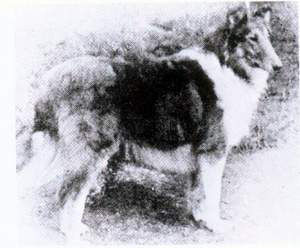
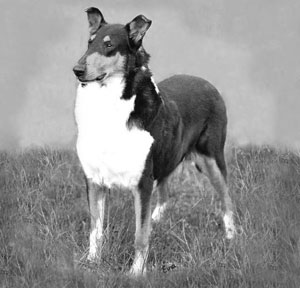
    Ok... this is not happening. If you look at pictures posted on Collies back in the early 1900's they look much the same as they do today. Sure some bloodlines might have shorter or longer heads.... honestly the last show I was at I never saw so many fat/heavy headed collies!.. which is incorrect, as opposed to dogs that are getting longer heads or noses as you say. Some people would say SOME of my dogs have a bit more width of head than what is preferred but it doesn't bother me.

    I know this is a bit off topic.. but can you honestly say the heads are longer today than back in the early 1900's?


    Born in 1899


    Born in 1902


    Born in 1922


    Born in 1966

    Some current pics...

    Lindsay


    Bree

    BTW in 1886 the Collie Club of America was formed, and it was the 2nd breed club to join the AKC. Now if you want to see some Collies that have REALLY changed since the early 1900's check out the European Collies. A huge difference there. They look nothing like the dogs from 100 yrs ago.


    Quote Originally Posted by wolfsoul View Post
    This is the problem with the show ring these days. Too many breeders are going for "type" above structure and practicality
    If you breed purebred dogs, you have to breed for type as well as everything else. You cannot not breed for type. Type is what sets one breed apart from another, without type, there would not be all these breeds. Breeding for "Type" is different in each breed. Collies for example, breed type is in their heads, everyone knows a collie from their head and sweet, soft expression and intelligent eyes. Without type a collie wouldn't look like a Collie. However as the great Steve Field, of Parader Collie fame (one of the most influential breeders of the Collie in America) once said, "A Collie is a herding breed, it does not walk on its head" you also need to breed for correct, sound structure. Collies were used as all around farm dogs, they need to be sound to work all day, without correct structure and movement they would be no good, however if you have a Collie with correct structure, but poor breed type, its not going to look like a Collie either. You cannot breed for one and not the other.


    Quote Originally Posted by wolfsoul View Post
    Fact is, the standards are not being set for the downfall of a breed -- the breeders pick up on whatever type is becoming trendy, that becomes the new type, and standards have to be changed in order to compensate for what the new trends are doing to the breed
    I agree with this, however a believe a large part of this falls into the hands of the judges who judge these dogs at dog shows. If they did not award dogs with incorrect type, structure or bad qualities, with big wins, people would not breed for these things. The fact of the matter is, if something won't win in the show ring, MOST of the big wigs in that particular breed won't breed for it, and so it won't become a popular thing.


    Quote Originally Posted by wolfsoul View Post
    Belgians are supposed to have 45 degree shoulder angulation. Because people are breeding poorly structured dogs and getting straighter and straighter shoulders, there is talk of the Belgian Tervuren Club of American launching a proposal to change the standard to call for 35 degree shoulder angulation.
    I agree with this! Luckily the Collie breed standard hasn't been changed in over 30 yrs (1977) and that was just to add color headed whites as an allowed color. Its POSSIBLE it will soon be changed again, but only to allowed sable merles as an allowed color. There is a huge debate about it right now, however even with sable merles not listed as an allowed color, many are shown and finished so its not a huge issue. Actually the #1 smooth collie in the country right now is a sable merle.


    Quote Originally Posted by wolfsoul View Post
    I love to show, and I always will.. but I will never put aside a dog's health just to win. As much as I feel that it is unfair to say which dogs you can show and which you can't (I feel that anyone with a purebred registered dog should be able to show, even if they know they won't win -- it's supposed to be a fun event!), maybe every show dog should have the required health certifications before being allowed into the show ring.
    While I agree people need to health test their dogs before breeding, doing something like this I don't think would be the answer. Besides that depending on the breed, and what health tests needed to be done, that would pretty much put an end to showing puppies, which I happen to love doing! I love taking a happy, goofy, clownish puppy in the ring, they are lots of fun to show!!

    Also if everyone with a purebred dog was allowed to show, even if they know they won't win, its not likely people who are showing them just for fun, even if they don't win, are breeders, and there for probably wouldn't be doing many if any health tests.


    Quote Originally Posted by wolfsoul View Post
    Zara -- do you ever see any cases of PRA? They are working on a blood test to dectect it in Belgians. I don't know why it is taking so long, as they have it for some other breeds (like tollers). There are some very nice dogs that I would consider adding to my breeding program, only there are PRA producers in the background. It's such a hard one because you never know if a dog carries it until it produces it -- I could have PRA in my lines and not even know it! What a frightening disease.
    Just earlier this year they finally found the DNA marker for PRA in Collies and there is now a test available for it. Luckily PRA is not a real commonly seen problem in Collies, though back in the 70's it was a HUGE problem (a VERY popular stud dog ended up being a carrier for it!!) and many breeders worked hard doing test breedings to breed it out of their lines. Its MUCH MUCH less common today than it was back then, but its still out there and pops up on occasion so its good to have a test for now!
    If you're gonna breed Collies, don't you forget to breed in the brains and common sense. Without that you won't have a Collie, you'll have just another dog.


    I've Been BOO'd!!

  4. #4
    Join Date
    Dec 2008
    Location
    Sweet Home Alabama (ZULU -6)
    Posts
    4,269
    I don't know anything about bred standards but have had some experience with Canine hip dysphasia.

    Koko my lab/golden mix was diagnosed with hip dysphasia at age 10 months. She had come up lame and was hobbling very badly. I was refered to a ortho Vet for an evaluation. Once there he acknowledged that she had hip dysphasia but because of her hips she had damaged both CCL's and would require knee surgery before anything else could be done. This Vet only did the TPLO type of CCL surgery. After doing a lot of research I decided that The TPLO procedures had to many risk. I contacted a friend that was a Equine Vet in New Mexico and ask his opinion. He refered me to the head of surgery at Auburn University, where he had attended Vet School. THE Auburn Ortho Vet told me that there were some risk with the TPLO procedure and if I felt better about the old tried and proven suture methold they could do this at Auburn because they taught their Vet Students both methods.

    They performed surgery on one knee and then 6 weeks later the other. We had Koko in a crate for 12 weeks with only brief periods out to go to do her business. She was a real trooper through the whole thing.

    The Vets at Auburn recommeded that we not do surgery on her hips. They thought with moderate exercise and supplements of glucosamine and chondroitin that she would be ok with limited pain.

    Koko's knees have not given her any problems in 3 years since the surgery. She does have hip pain from time to time and I have to make sure she doesn't over do the running and playing. When a low pressure weather front comes through that brings rain you can always tell she is in pain during these times. I usually give her an anti-inflammatory drug and she will usually be ok the next day. I imagine as she gets older the arthritis in her hips will get worst, I guess time will tell. She is a happy active wonderful dog that I would be lost without.

  5. #5
    Join Date
    Sep 2005
    Location
    At university in Hertfordshire, UK
    Posts
    4,944
    Quote Originally Posted by Freedom View Post
    The first part above struck me. Here in the USA, our veterinarians do routine surgeries, but a veterinary surgeon is a specialty with extra training and certifications. They are 2 different professions, if you will. So just thought I'd point that out. I haven't any idea how the terms translate across the pond!
    Funnily enough I had often wondered why some people on here use the word "veterinarians" and others used the term I'm more familiar with! All the vets I have worked with, and the line I want to go into, both consult clients directly in open surgery and perform a wide variety of invasive operations, x-rays, etc. This is what about 99.9% of vets in practice do over here. There is just one veterinary medicine degree (although all universities over here have their own slight 'variety', but it is ultimately the same qualification). You become qualified in both large and small animal practice, as well as some knowledge of exotics which you can expand if you so choose.

    I did in fact consider applying to an American or Canadian university. It's just so difficult to get a place on a UK veterinary course. It's the most over-subscribed course there is, and with only 7 universities offering the course with about 70 places each (and each candidate is only permitted to apply to four), you can be as keen and as motivated and as intelligent as you like and still get a string of rejections. It's really, really daunting. A lot of the qualified vets I've worked with did not get into university on the first or even second time they applied although I suppose the consolation is they made it in the end. Still, I don't think I'm totally ready to move half-way across the world just yet, and besides I think the DVM is quite distinct from the BVetMed and the likes that I've become accustommed to.

    All the information I'm getting here though is really helpful in enriching my knowledge, and hopefully will make the unis sit up and notice me.

    Quote Originally Posted by Freedom
    PDA heart murmurs: I only know of this through the bichon rescue group newsletters. They have successfully saved 67 bichon babies, with surgery to correct this defect. They will fly a pup cross country to use the vet surgeon who has developed a specific technique for this condition. This shows up in pups prior to 12 weeks old and is fatal if not surgically corrected. The new surgery has 100% success rate! In the past 2 years, 2 pups were not flown to him and had surgery at another facility and both died. So now the rescue insists on getting all the pups to that one surgeon to do the work.
    Wow, that's quite some success rate. Do you have any more information on the surgery he is performing? That sounds quite radical and I'm sure would really impress interviewers if I could talk about a development that hasn't even reached this country yet!

    Quote Originally Posted by wolfsoul
    Zara -- do you ever see any cases of PRA? They are working on a blood test to dectect it in Belgians. I don't know why it is taking so long, as they have it for some other breeds (like tollers). There are some very nice dogs that I would consider adding to my breeding program, only there are PRA producers in the background. It's such a hard one because you never know if a dog carries it until it produces it -- I could have PRA in my lines and not even know it! What a frightening disease.
    Yes, I've seen one definite case and one strongly suspected case, and also a case in a cat, which I think is the same condition. A vet I was working with also said there's some research going on to identify the gene in various terriers as well. I'm not sure why they can't find the gene in certain breeds either, as dog breeds are all the same species and can all, theoretically, breed with each other, so their genetic make-up can't be that different. I should have thought of the question to ask him there and then but was preoccupied with the opthalmoscope looking into the dog's eye!

    Thanks to everyone who's shared information, this is really such a great help, and also a really interesting discussion.

    Zimbabwe 07/13


Similar Threads

  1. Viral diseases in adopted kitties
    By Kirsten in forum Cat General
    Replies: 19
    Last Post: 12-22-2005, 07:26 PM
  2. Genetic Engineering?
    By Kfamr in forum Dog House
    Replies: 8
    Last Post: 02-14-2004, 08:47 AM
  3. Replies: 34
    Last Post: 11-21-2003, 10:21 AM
  4. rat genetic experimentation
    By wolfsoul in forum Pet General
    Replies: 15
    Last Post: 03-14-2003, 08:36 PM
  5. Help me with my studies.
    By Heather Wallace in forum Dog General
    Replies: 2
    Last Post: 02-03-2002, 12:07 AM

Bookmarks

Posting Permissions

  • You may not post new threads
  • You may not post replies
  • You may not post attachments
  • You may not edit your posts
  •  

Copyright © 2001-2013 Pet of the Day.com