Yahoo News section is where it came from.
Wikipedia seems to back much of it up.
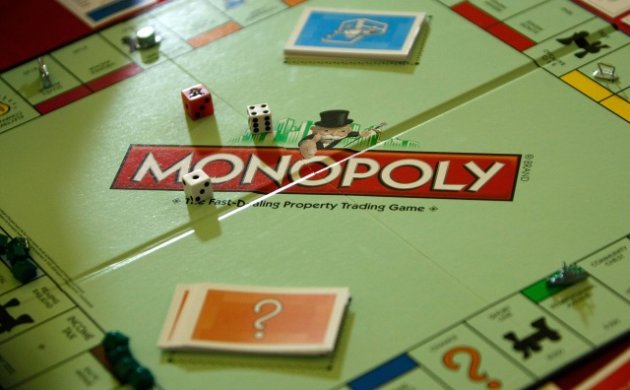
Monopoly: http://en.wikipedia.org/wiki/History..._game_Monopoly The
history of the board game Monopoly can be traced back to the early 20th century. The earliest known design was by the American,
Elizabeth Magie, patented in 1904 but existing before that.
[1] A series of
board games were developed from 1906 through the 1930s that involved the buying and selling of land and the development of that land. By 1934, a board game had been created much like the version of
Monopoly sold by
Parker Brothers and its parent companies through the rest of the 20th century, and into the 21st. Several people, mostly in the
Midwestern United States and near the
East Coast, contributed to the game's design and evolution.
Chutes and Ladders (Snakes and Ladders): http://en.wikipedia.org/wiki/Snakes_and_Ladders
Snakes and Ladders
originated in India as part of a family of dice board games, including
pachisi (present-day
Ludo and
Parcheesi). It was known as
moksha pAtam or
vaikunthapaali or
paramapada sopaanam (the ladder to salvation).
[3] The game made its way to England and was sold as "Snakes and Ladders", then the basic concept was introduced in the United States as
Chutes and Ladders (an "improved new version of England's famous indoor sport"
[4]) by game pioneer
Milton Bradley in 1943.
[3]
Life:http://en.wikipedia.org/wiki/The_Game_of_Life
The game was originally created in 1860 by
Milton Bradley as
The Checkered Game of Life. This was the first game created by Bradley, a successful
lithographer, whose major product until that time was a portrait of
Abraham Lincoln with a clean-shaven face, which did not do well once the subject grew his famous beard. The game sold 45,000 copies by the end of its first year. Like many games from the 19th century, such as
The Mansion of Happiness by
S.B. Ives in 1843, it had a strong
moral message.
[4]
Scrabble: http://en.wikipedia.org/wiki/Scrabble#History
In 1938, American architect
Alfred Mosher Butts created the game as a variation on an earlier word game he invented called
Lexiko. The two games had the same set of letter tiles, whose distributions and point values Butts worked out by performing a
frequency analysis of letters from various sources including
The New York Times. The new game, which he called "Criss-Crosswords," added the 15×15 gameboard and the crossword-style game play. He manufactured a few sets himself, but was not successful in selling the game to any major game manufacturers of the day.
[5]
Clue: http://en.wikipedia.org/wiki/Cluedo
In 1944,
Anthony E. Pratt, an English solicitor's clerk, filed for a patent of his invention of a murder/mystery-themed game, originally named "Murder!" The game was originally invented as a new game to play during sometimes lengthy
air raid drills in underground
bunkers. Shortly thereafter, Pratt and his wife presented the game to
Waddingtons's executive, Norman Watson, who immediately purchased the game and provided its trademark name of "Cluedo" (a play on "
clue" and "
Ludo";
ludo is
Latin for
I play). Though the patent was granted in 1947, due to post-war shortages, the game was not officially launched until 1949, when the game was simultaneously licensed to
Parker Brothers in the United States for publication, where it was renamed "Clue" along with other minor changes.




 Reply With Quote
 Originally Posted by Catty1


Bookmarks