Quote Originally Posted by Freedom
I did take him to a vet dermatologist in the end. She explained that they have NO tests for food allergies. It is all trial and error, with YOU reading lables and eliminating items. The most common cat food allergies are wheat, grains, fish. Bobby seems also allergic to beef, chicken and lamb!
The dermatologist DOES have a test kit with 45 or so things for environmental allergies. It is expensive to run the test, and food allergies are more common.
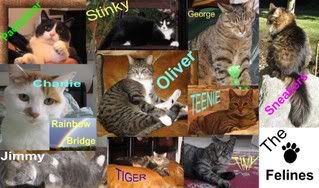
The Veterinary Allergy Reference Lab in California does perform tests to determine what food allergies cats and dogs can have. Our vet sent George's blood serum off to them and the results came back with George being allergic to Wheat, Dairy, Pork, Rice and Turkey. They offer a desensitizing product that they create that can help your pet adjust to whatever they are allergic to but it's expensive. But the results were quite helpful and allow us to figure out what food to give George. It's been nearly impossible finding a food without all the above ingredients though!
p.s. the test cost us around 200.00 but that was a couple of years ago.

Here are a few paragraphs from the VARL Website:
VARL – Veterinary Allergy Reference Laboratory – is a USDA licensed laboratory serving veterinarians all over the United States and 24 other countries worldwide in the specialized area of serum allergy testing and formulation of customized allergen prescription vaccines for individual allergic dogs and cats. The laboratory is dedicated solely to helping veterinarians precisely identify the allergens causing their patients’ allergies and, when requested by the veterinarian, formulate the treatment allergy vaccines to desensitize them to the identified culprit allergens.


Before 1990 veterinarians desiring to identify the individual allergens causing their patients’ allergies had only two options. The patient was either referred to a veterinary dermatologist for intradermal skin testing or the patient’s serum sample was submitted to a laboratory using the RAST/ELISA technology to identify culprit allergens. Patients, however, cannot be skin-tested while under the influence of antihistamines or corticosteroids – the same drugs that relieve them of their allergy symptoms. Weeks of abstinence and withdrawal from these drugs are necessary before skin testing can be performed. In the time being the pet suffers. The RAST/ELISA serum testing employs a solid-phase methodology to identify culprit allergens from a patient’s serum but with a reputation of unacceptable high incidence of false positive results. So, when veterinarians started asking for a serum allergy test that is accurate for determining the culprit allergens that make their dog and cat patients itch so miserably … We Heard!


In 1990, VARL developed the first serum allergy test technology that is not based on solid phase reaction like RAST/ELISA. VARL engineered a unique liquid phase matrix technology which, for the first time, is capable of accurate identification of offending allergens from serum samples of dogs and cats without the notorious false positive results commonly encountered with solid phase RAST/ELISA. The Liquid Gold’s truly innovative and, without a doubt, revolutionary technology combines the exquisite selectivity of avidin-biotin interaction with the superior sensitivity of our unique liquid phase matrix to give veterinarians the most accurate and dependable identification of offending allergens. Based on these results, VARL then formulates customized allergen prescription vaccine mixtures in our state-of-the-art USDA licensed facility to desensitize the patients to their allergies. These patients can now live a normal life without aggravating their owners with constant scratching, recurrent skin and ear infections and the debilitating complications that inevitably accompany long-term usage of corticosteroid drugs.